KIRO FM Features the UW CSE Security Team
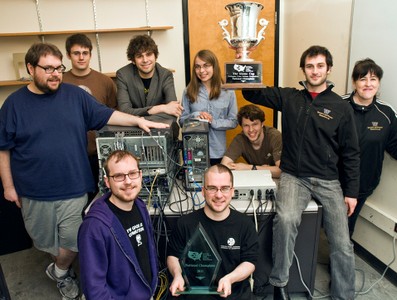 The UW CSE Security Competition Team was featured today in a story on 97.3 KIRO FM. You can read the article here and can also listen to the full audio interview here.
Security and Privacy Research Lab
Paul G. Allen School of Computer Science & Engineering, University of Washington
The UW CSE Security Competition Team was featured today in a story on 97.3 KIRO FM. You can read the article here and can also listen to the full audio interview here.
 “Keypad: An auditing file system for theft-prone devices,” a paper describing a new file system that enhances data security on mobile devices, has been named Best Student Paper at this year’s EuroSys 2011 conference. The paper was authored by UW CSE graduate students Roxana Geambasu and John P. John and UW CSE faculty members Steve Gribble, Yoshi Kohno, and Hank Levy.
Congratulations!
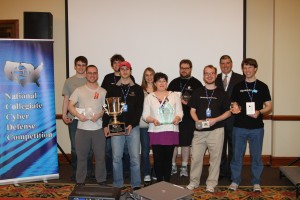 The UW CSE computer security competition team consisting of Alexei Czeskis (team captain), Karl Koscher (team co-founder), Ian Finder, Mary Pimenova, Cullen Walsh, Baron Oldenburg, Conrad Meyer, and Mark Jordan — coached by Melody Kadenko — just won the National Collegiate Cyber Defense Competition!
The finals, held April 9 and 10, featured 9 teams from across the nation — the winners of 9 regional competitions.
Congratulations!!!!!
Update (4.11.2011): The Seattle Times just wrote an article about the team’s win.
Update (4.13.2011): UW Today also wrote an article about the team.
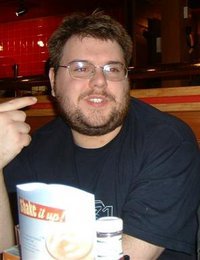 UW CSE Security Lab member Karl Koscher just won the College of Engineering Ford Motor Company Fellowship. Congratulations Karl!
 The UW CSE cyber defense competition team just won regionals! Congratulations to team members Alexei Czeskis (team captain), Ian Finder, Mark Jordan, Karl Koscher, Conrad Meyer, Baron Oldenburg, Mary Pimenova, and Cullen Walsh!
Update (4.7.2011): The Seattle Times has written an article about the team: “A team of eight University of Washington students will wage war this weekend against an expert force, defending their territory with stealth tactics and on-the-fly invention. But there are no physical weapons involved. There’s not even a physical battleground. For the fourth year in a row, the team will compete in the National Collegiate Cyber Defense Competition, in which teams from around the country attempt to shield a computer system from professional hackers aiming to cause havoc ranging from stealing trade secrets to turning home pages into random YouTube videos.”
Read the full article here.
The Associated Press and The New York Times broke the story, with additional coverage at Technology Review, PCWorld, Slashdot, Jamie Zawinski’s blog, Boing Boing, and The Volokh Conspiracy. More information at the CEASS site.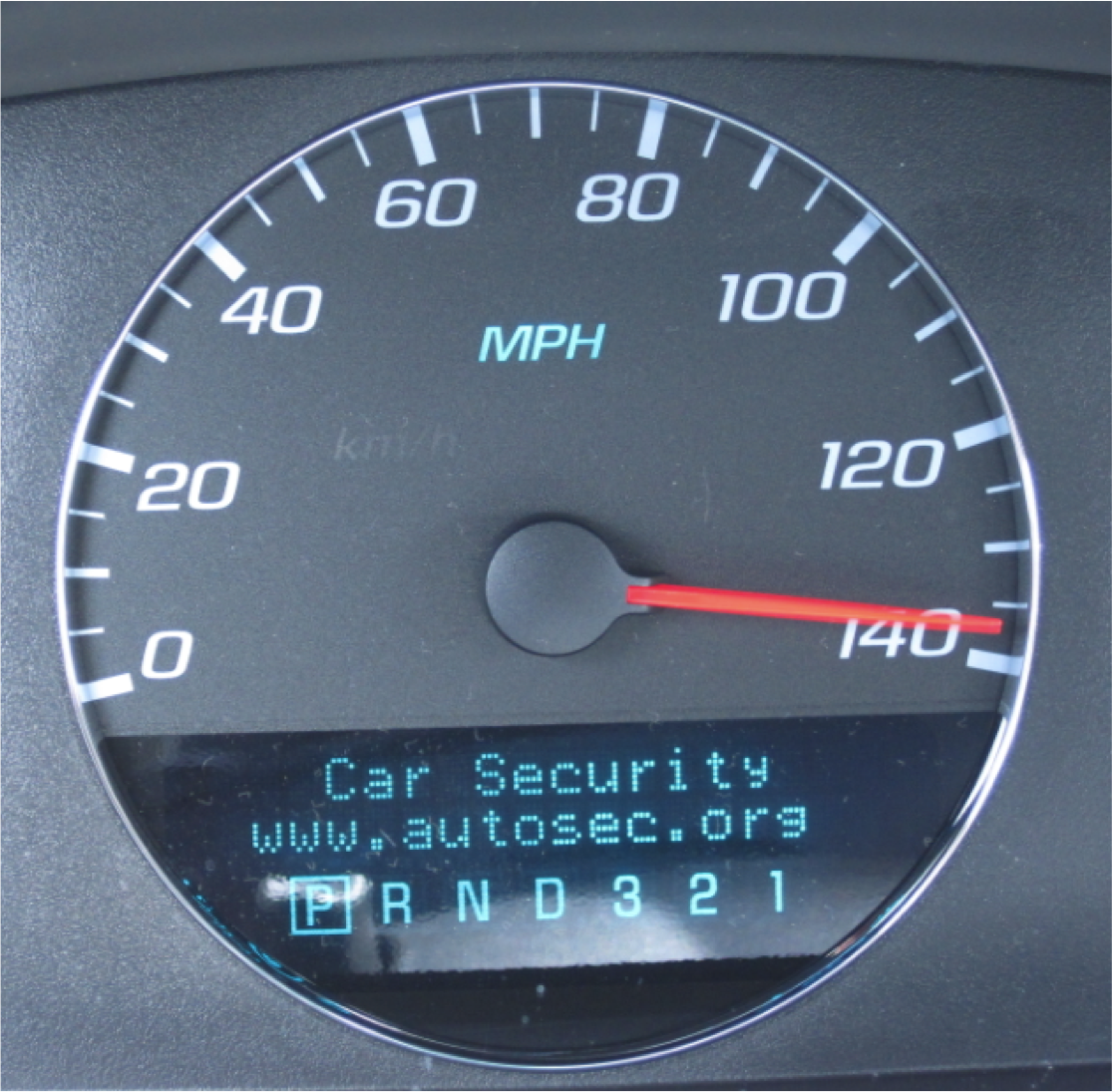 Congratulations to Karl Koscher, Alexei Czeskis, and Franziska Roesner, and their University of California at San Diego collaborators Steve Checkoway, Damon McCoy, Brian Kantor, and Danny Anderson, whose study of the vulnerability of modern cars to remote compromise was picked up by the press after being presented to the
 UW security and privacy researchers had a strong showing at the 2011 Computers, Privacy & Data Protection conference in Brussels, Belgium, winning both the Multidisciplinary Privacy Award award and an honorable mention.
The goal of the CPDP multi-disciplinary privacy research award is to promote the need for and reward the results of multidisciplinary research, with the participation of the representative of diverse constituencies engaged in the investigation of the new ideas in data protection. Any paper published or accepted for publication in 2010 was eligible to win.
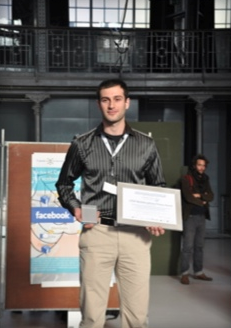
UW CSE grad student Alexei Czeskis and alumni Iva Dermendjieva and Hussein Yapit won the award for their work on balancing privacy and value tensions in mobile parenting technologies (published at SOUPS 2010 with co-authors Alan Borning, Batya Friedman, Brian Gill, and Tadayoshi Kohno). Alexei, pictured on the right, went to Belgium to receive the award.
UW CSE PhD student Tamara Denning won an honorable mention for her work on analyzing human values and security for wireless implantable medical devices (published at CHI 2010 with co-authors Alan Borning, Batya Friedman, Brian Gill, Tadayoshi Kohno, and William Maisel).
Congratulations!
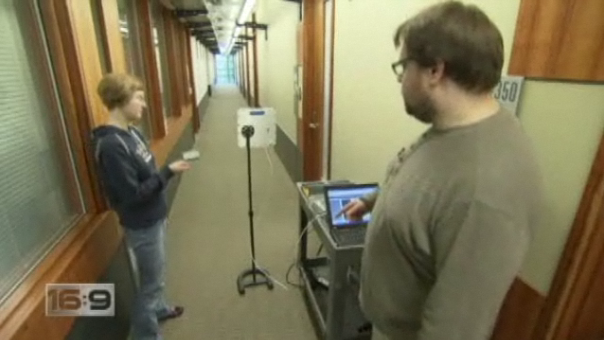 UW security research Karl Koscher is featured in 16:9, Canada’s version of 60 Minutes. Karl is seen discussing his research on the security and privacy properties of the new US Passport Cards and Enhanced Drivers Licenses. Also featured in the video is UW PhD student Emily Fortuna.
 The U.S. National Institute of Standards and Technology (NIST) has selected the Skein cryptographic hash function as one of five finalists in its SHA-3 competition. The winner will become the new U.S. hash function standard. Sixty-four proposed hash function designs were submitted to NIST when the competition began two years ago. Skein was designed by a team of cryptographers and computer security experts, including UW’s Yoshi Kohno. (If you look closely, you’ll notice that the team photo was taken in the beautiful halls of the UW Paul G. Allen Center for Computer Science & Engineering.)
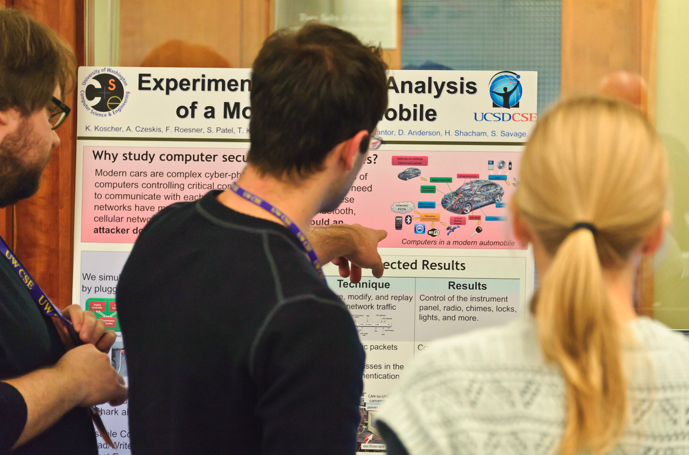 The annual UW Computer Science & Engineering Industrial Affiliates Meeting took place on October 27th and 28th. On the 27th, more than 100 representatives from Affiliates companies participated in a day of research presentations, and more than than 250 Seattle-area alumni joined for an evening of posters. There were also awards. UW security and privacy lab PhD students Karl Koscher, Alexei Czeskis, and Franzi Roesner won an award for their poster on car security, and PhD student Roxana Geambasu and graduate student Amit Levy won an award for their poster on Comet: An Active Distributed Key-Value Store.
The photo at the right, taken by UW CSE faculty member Bruce Hemingway, shows (from left) Karl, Alexei, and Franzi discussing their poster with an attendee.